Visual relief in high-stress care settings
Hospital & Emergency Care Wall Art
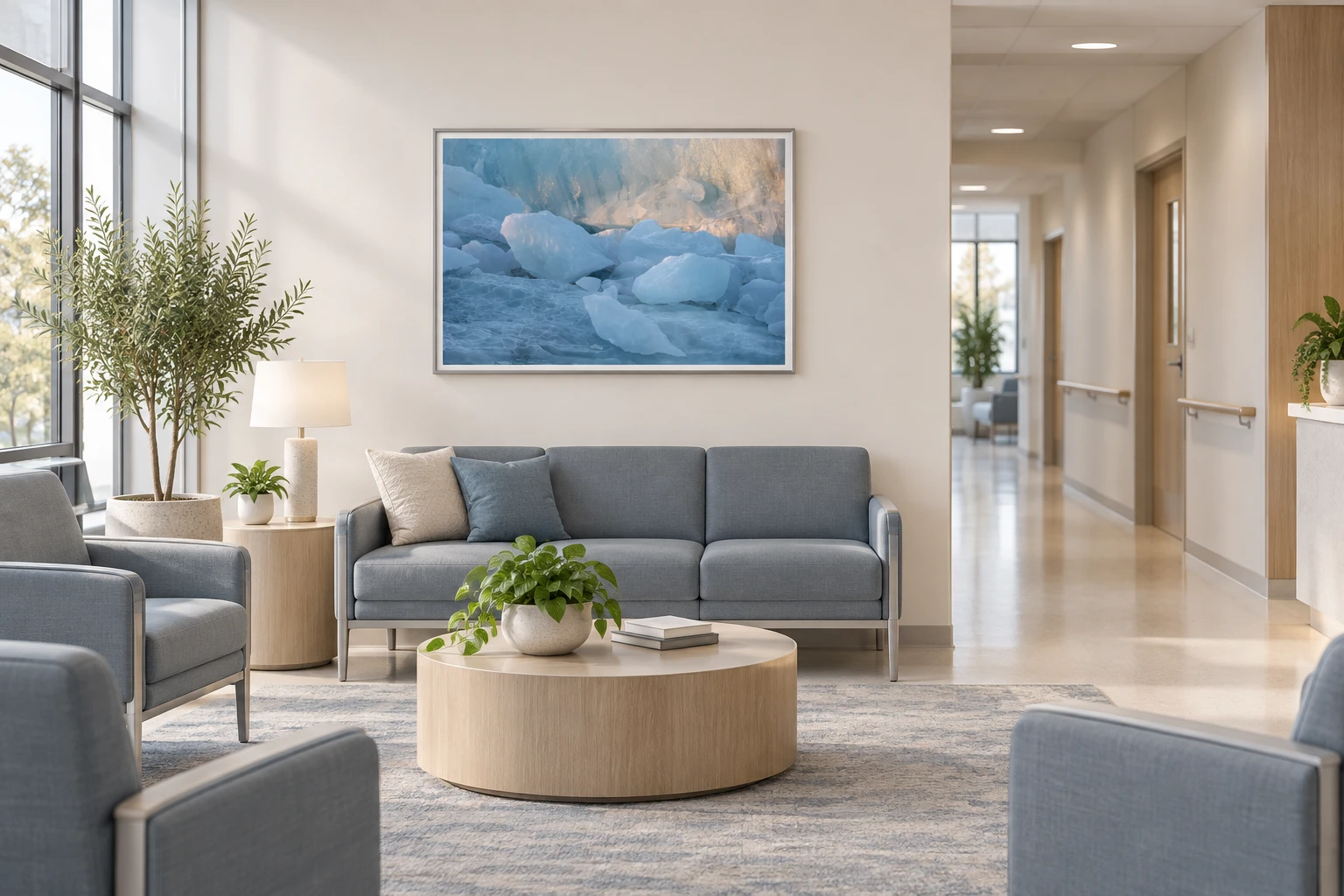
Emergency departments and urgent-care facilities combine uncertainty, noise, long waits, constant movement, and a wide range of patient conditions. Wall art cannot remove those stressors, but it can give the eye a stable, non-clinical place to rest and help the environment feel more considered.
The most relevant research is not about a preferred paint color. It examines visual nature as a positive distraction and observes behavior in real emergency waiting rooms. That evidence supports thoughtful use of nature imagery while leaving room for differences among facilities and patient populations.
Selection guidance
What matters when choosing artwork for this setting.
- 01
Low-threat subjects
Open water, layered terrain, healthy vegetation, and navigable-looking landscapes are safer starting points than cliffs, severe storms, wildfire, or ambiguous dark forms.
- 02
Legible at a distance
Emergency spaces are busy. Favor an organized composition and clear focal structure that can be understood from several viewing positions.
- 03
Control reflections
Bright ceilings and around-the-clock lighting can obscure dark or glossy artwork. Evaluate finish and placement under both daytime and nighttime conditions.
What an emergency-department study observed
A 2012 study installed still and video nature art in two emergency-department waiting rooms and analyzed patient and visitor behavior. The study reported significant reductions in restless behavior and noise level, with no meaningful change in aggressive behavior. This is valuable setting-specific evidence, but it is not proof that every nature image will create the same result.
The practical lesson is to select imagery as part of the whole waiting experience. Sightlines, seating orientation, acoustic conditions, lighting, information displays, and the duration of viewing all influence whether art can function as a useful visual focus.
Calm under pressure
Choose open, legible landscapes for emergency and urgent-care spaces.
In emergency care, the priority is not decorative excitement. Patients and visitors are already processing noise, uncertainty, movement, and information. Artwork should offer a clear visual destination without adding threat or confusion.
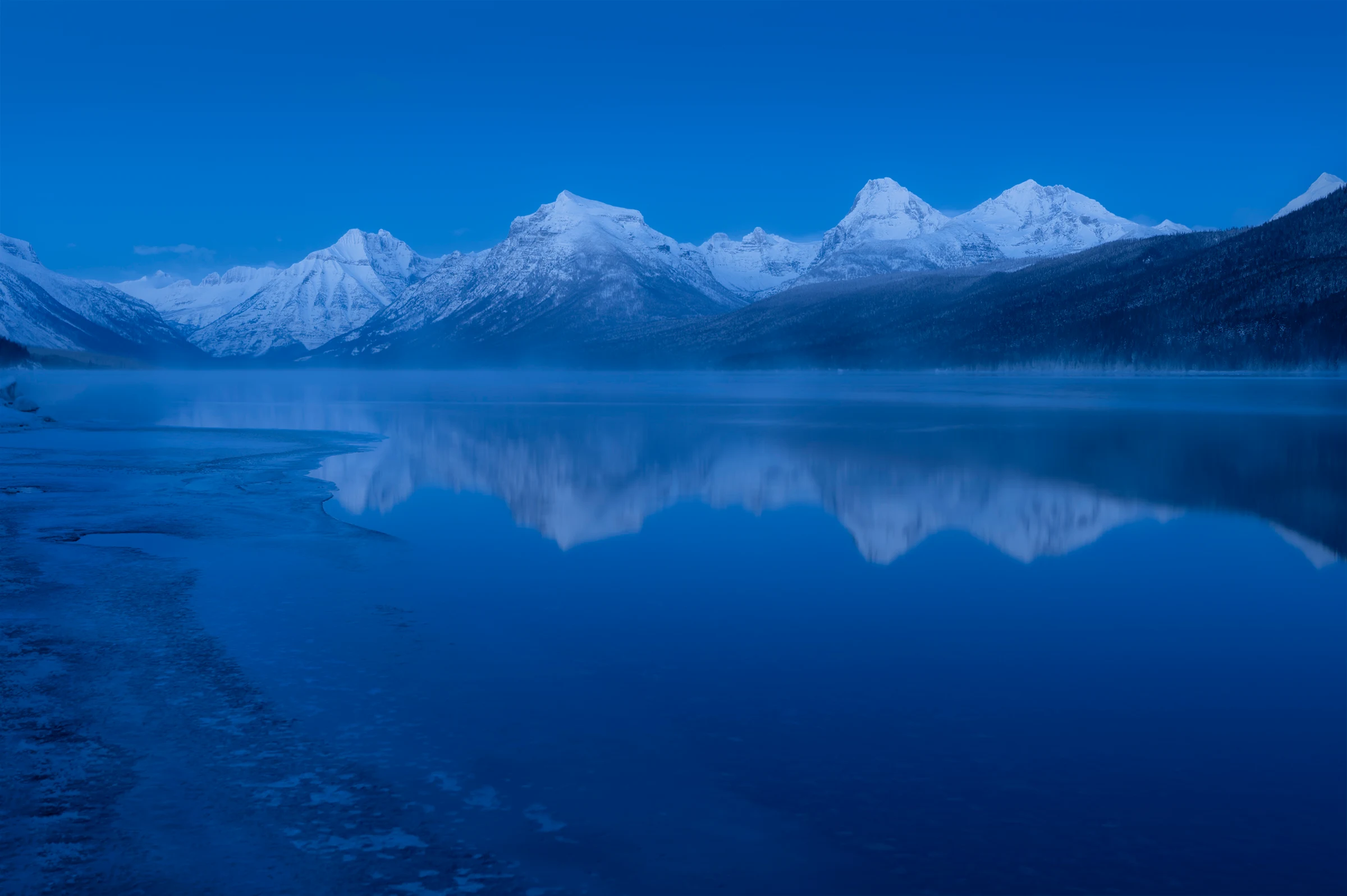
Color is most useful when it supports that structure: blue and green can reinforce water, sky, and vegetation; small areas of yellow can add warmth; open distance can reduce the feeling of visual confinement.
Quiet blue-green
Water, forest edges, and blue-green distance can feel settled without becoming lifeless. Select moderate contrast so the image remains readable under continuous clinical lighting.
- Subjects & texture
- Look for still water bordered by vegetation, a river entering a wider valley, blue-green mountain layers, or healthy forest softened by atmospheric distance. Reflections and repeated foliage supply detail without the sharp visual noise of broken branches, heavy rock texture, or tangled undergrowth.
- Specification
- Use blue-green images in the main waiting area, quieter family zones, or long corridors where one large work can establish a visual destination. A matte, luster, or carefully positioned low-glare presentation is preferable where ceiling fixtures remain on around the clock.
A warm point of light
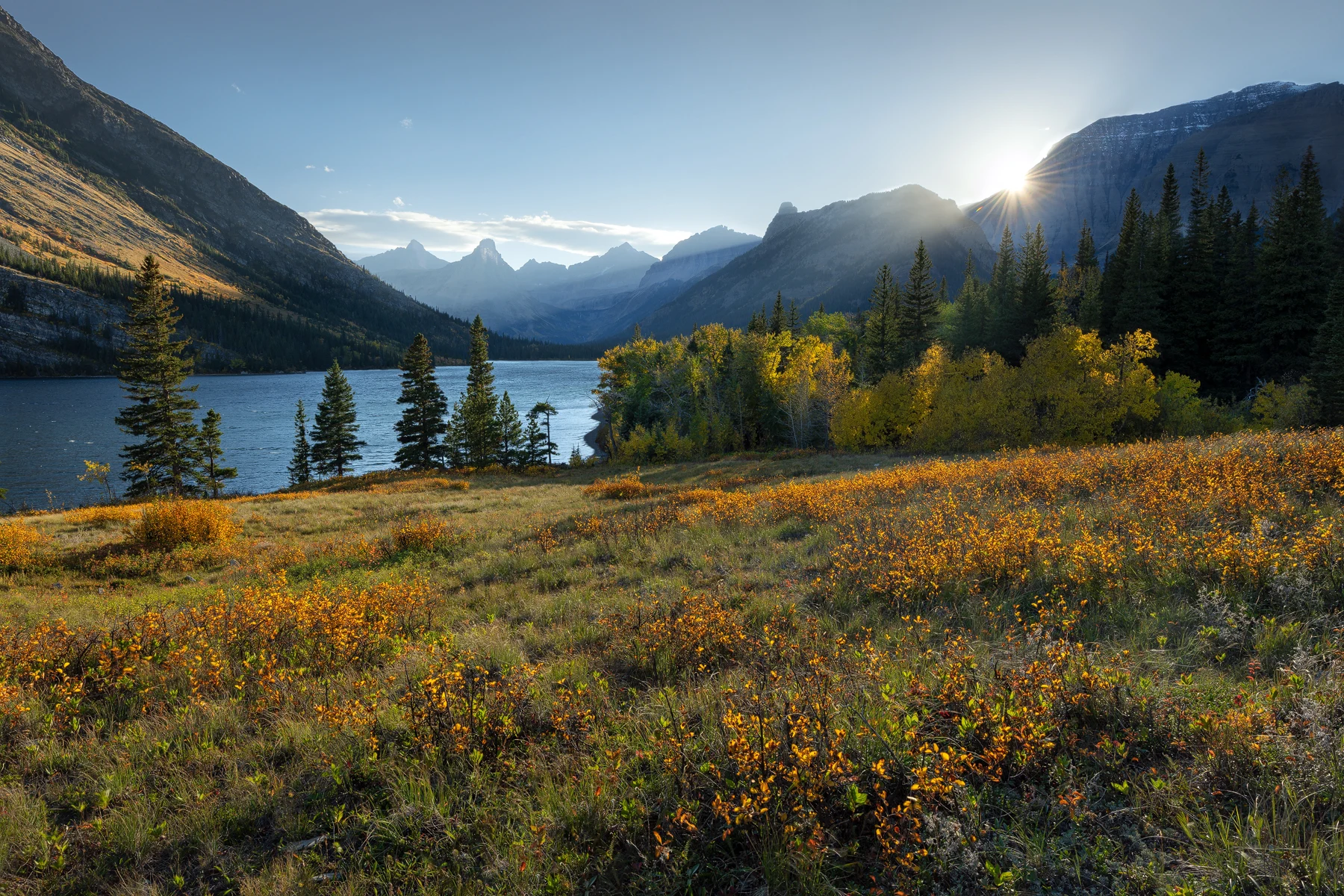
A small area of sunlight, gold foliage, or a bright clearing can keep a cool composition from feeling cold. It should guide the eye rather than dominate the room.
- Subjects & texture
- Appropriate examples include dawn touching a distant ridge, sunlight moving across grass, yellow leaves around a forest opening, or a narrow reflection on calm water. The warm area should have a clear relationship to the rest of the scene rather than appearing as an isolated high-saturation spot.
- Specification
- A controlled warm accent is useful near reception, family consultation, or seating areas that otherwise feel gray and impersonal. Avoid intense red-orange sunsets, wildfire-like glow, or sharp yellow-black contrast that can resemble caution graphics already used in emergency environments.
Open horizon
A broad sky, calm shoreline, or distant mountain layer gives the eye an immediate place to settle. Clear depth is especially valuable where walls, seating, and equipment make the room feel crowded.
- Subjects & texture
- Choose landscapes with broad horizontal organization: water below sky, meadow below mountains, or a valley receding toward a stable horizon. Large quiet shapes remain readable across a busy room, while smaller cloud, grass, or reflection textures provide interest during a longer wait.
- Specification
- Panoramic proportions can work well above banks of seating or on long corridor walls, provided the image does not compete with required signs and monitors. Confirm the sightline from several seats and keep the horizon near a comfortable seated eye level when possible.
Low-threat weather
Mist and soft clouds can add atmosphere, but avoid lightning, fire, crashing water, exposed heights, or severe storms in a high-stress waiting environment.
- Subjects & texture
- Soft fog lifting from a lake, high clouds over a broad valley, gentle snowfall, or diffuse overcast light can create atmosphere without implying immediate danger. The landform should remain understandable through the weather so the image does not become ambiguous or ominous.
- Specification
- Reserve darker atmospheric work for staff or lower-stress areas where the audience and lighting support it. In emergency waiting, urgent care, and family zones, favor brighter midtones, visible ground, and weather that appears to be clearing rather than intensifying.
Plan for intensity, circulation, and repeated viewing
Use larger, quieter images where people sit for extended periods. Along circulation routes, a sequence of distinct landscapes can mark progress and provide recognizable points of reference. Near triage or information desks, artwork should not compete with signs, monitors, or staff communication.
For emergency and urgent-care spaces, avoid relying on a dramatic photograph simply because it is visually impressive. A scene that conveys danger, exposure, turbulent weather, or an inaccessible ledge may be a poor fit for someone already under stress.
Practical placement
How to specify the artwork for the actual space.
- Main waiting area
- Use a large, composed landscape within common sightlines and away from constantly changing digital information.
- Family consultation zone
- Choose lower-contrast scenes and a matte or low-glare presentation that supports a quieter conversation area.
- Treatment corridor
- Build a consistent regional sequence with distinct visual landmarks; preserve all clinical and wayfinding clearances.
- Urgent-care exam room
- Place the image where the seated or reclined patient can see it, not only where it looks best from the doorway.
Research sources
Evidence behind the guidance.
These peer-reviewed studies and reviews inform the page without turning artwork into a medical or performance promise. Individual responses, setting, lighting, culture, and research quality still matter.
- Impact of Visual Art on Patient Behavior in the Emergency Department Waiting RoomJournal of Emergency Medicine, 2012
- The Effects of Nature Images on Pain in a Simulated Hospital Patient RoomHealth Environments Research & Design Journal, 2010
- The Impact of Color in Healthcare Environments: A Systematic Review and Research AgendaShiraz E-Medical Journal, 2024