Photographing Glacier National Park: A Landscape Photographer's Field Guide
A firsthand guide to seasons, weather, scouting, safety, and making more thoughtful photographs in Montana's most complex mountain landscape.
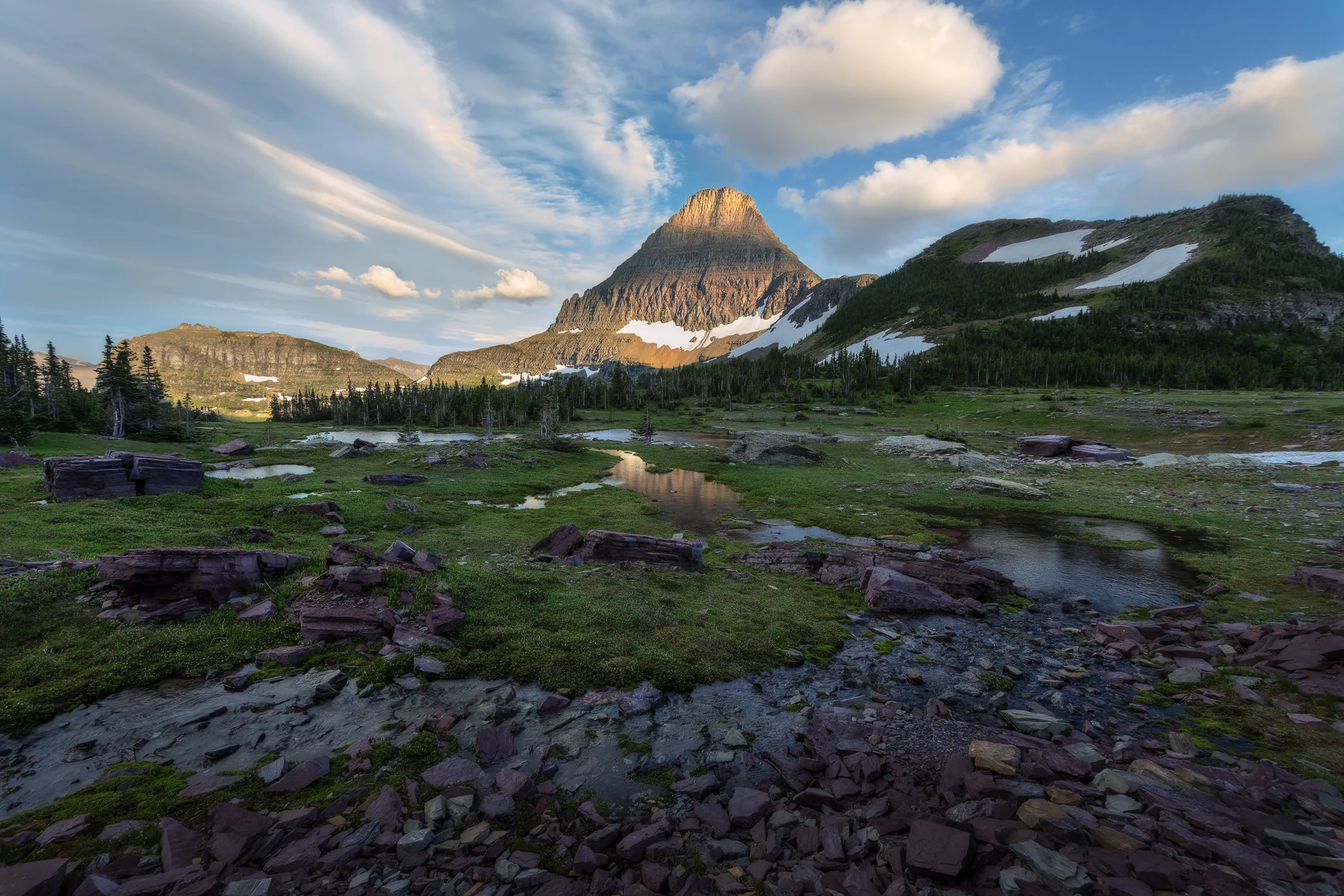
QuenchedMount Reynolds, Glacier National Park, Montana
Field Notes
Glacier rewards preparation, but it rarely rewards a rigid plan. The photographs I value most came from returning, watching weather develop, and staying responsive when the mountain offered something different from what I expected.
In the spring of 2020, I moved to Whitefish, Montana, near the western edge of Glacier National Park. Two days after arriving, my connection to the area was strong enough that I extended my lease. I would spend roughly a year and a half living near the park, photographing it through changing seasons, and working as a hiking and backpacking guide in its frontcountry and backcountry.
That combination changed how I understood Glacier. I was not only arriving for sunrise, making a photograph, and leaving. I was learning trail systems, watching storms cross the Continental Divide, cooking dinner for guests after a long day, managing risk in grizzly country, and returning to the same landscapes until I understood how light and weather moved through them.
This is not a checklist of famous overlooks. It is the field guide I wish more photographers carried: an approach to timing, weather, scouting, composition, and safety built from living close enough to see Glacier when it was clear, crowded, stormbound, frozen, quiet, and occasionally far more intense than any forecast suggested.
Living and working near Glacier
Working as a guide made the park feel less like a collection of destinations and more like a connected living system. A calm lake was tied to the storm that had passed overnight. A trail through a dense forest was shaped by fire, snow load, water, and the animals moving through it.
Guiding also taught me to pay attention before I ever lifted a camera. I learned to read how people moved through terrain, where a group could safely stop, how quickly temperatures changed after the sun left a valley, and how much energy remained after ten miles.
At Logging Lake, the photograph was not a single lucky encounter. We backpacked into the valley and watched dense morning fog settle over the lake, then begin to lift as sunlight reached the water and forest. Being there long enough to see that daily rhythm mattered more than chasing a familiar composition.
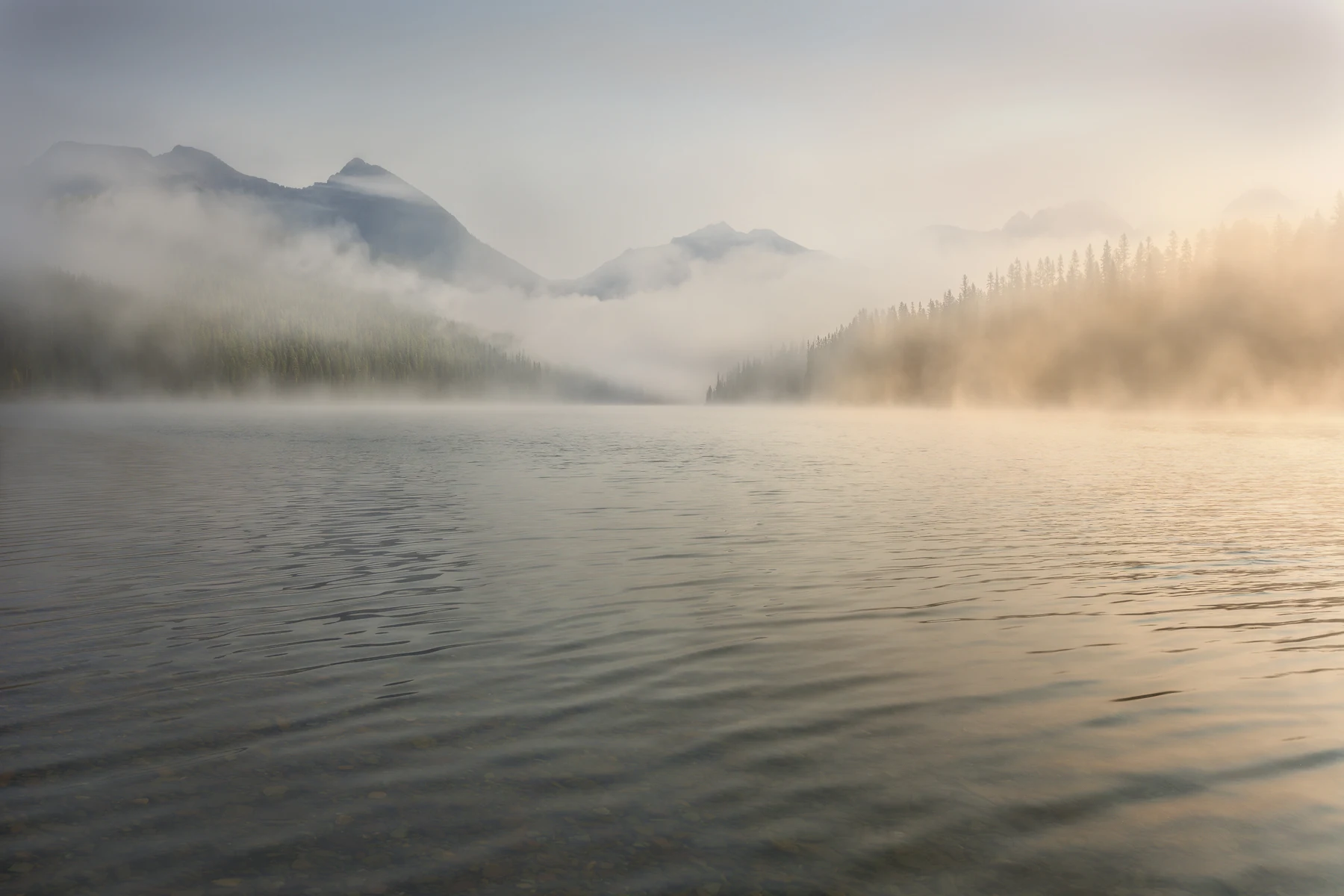
The deeper lesson was simple: time in a place creates better decisions. It does not guarantee dramatic light, but it teaches you what the landscape is capable of.
Photographing Glacier through all four seasons
There is no single best season for photographing Glacier National Park. There are four different parks, each with its own access, color, weather, pace, and level of commitment. Choosing a season is really choosing the kinds of problems you want to solve.
Spring: low valleys and a slow opening
Spring arrives unevenly. Lower western valleys can be green and wet while the high country remains buried. Rain is common, higher trails may hold dangerous snow well into June, and much of the alpine road system is still being cleared.
Work from what is accessible. Look for runoff and forest, fresh leaves against old snow, or fog separating layers of trees. Spring light is often soft enough to photograph well beyond sunrise and sunset.
Summer: alpine access and long days
Summer offers the broadest access, wildflowers, and the clearest chance to work in the high country. It also brings the largest crowds. I plan around early starts, late finishes, and the hours between obvious light.
Once alpine areas open, use midday for scouting. Walk the scene, test foregrounds, note where people congregate, and return when the light and pace are better.
Fall: color and the first real winter weather
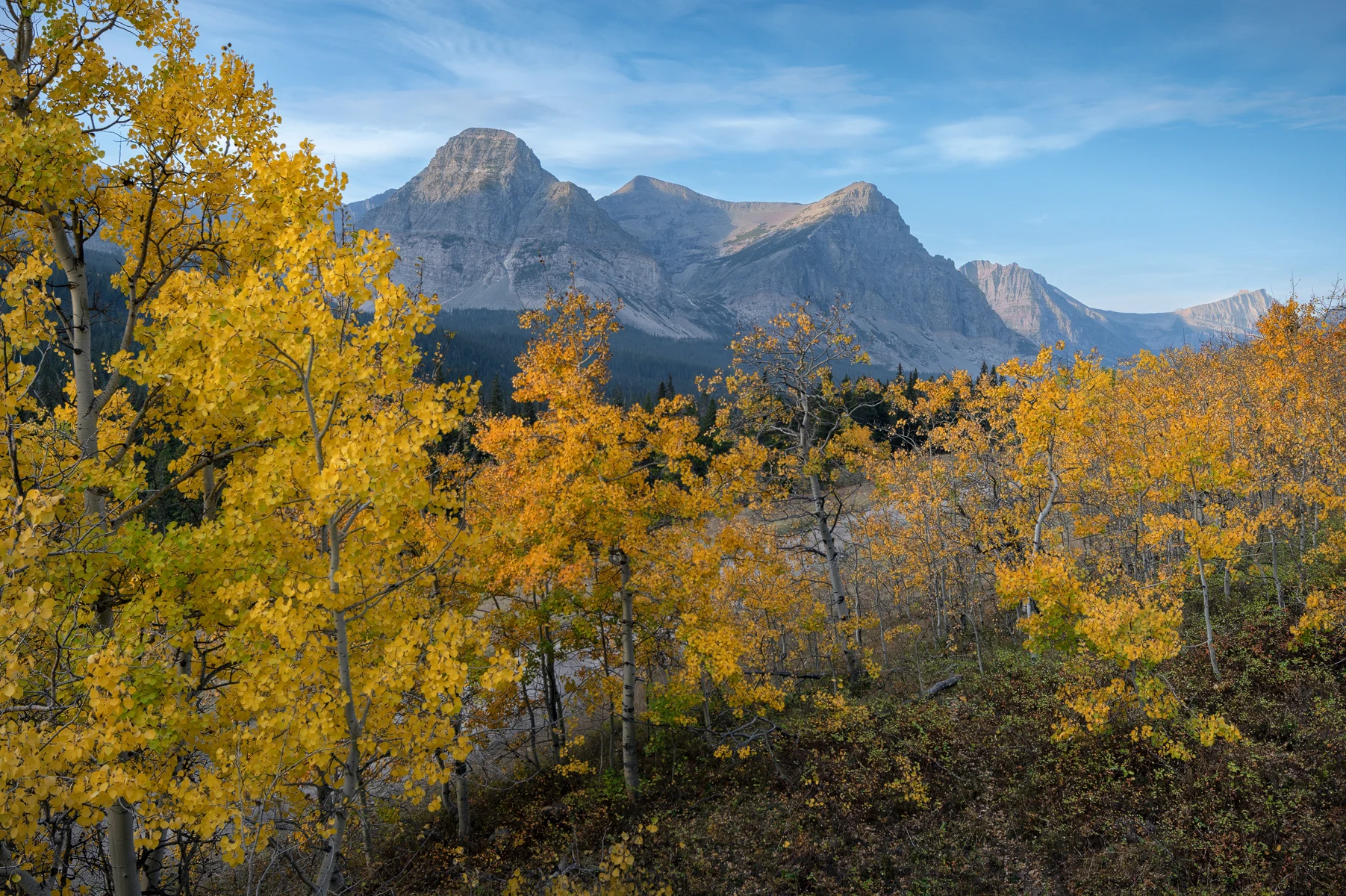
Fall is my favorite period for the collision of seasons. Aspens can turn by mid-September, western larch color often arrives later in October around the broader Flathead and park boundary country, and snow can reach low elevations surprisingly early.
The tradeoff is access. Services begin closing, nights lengthen, and roads can close before the calendar says they should. If the high country disappears into snow, the lower forests, lakes, and river corridors may be at their best.
Winter: restraint and self-sufficiency
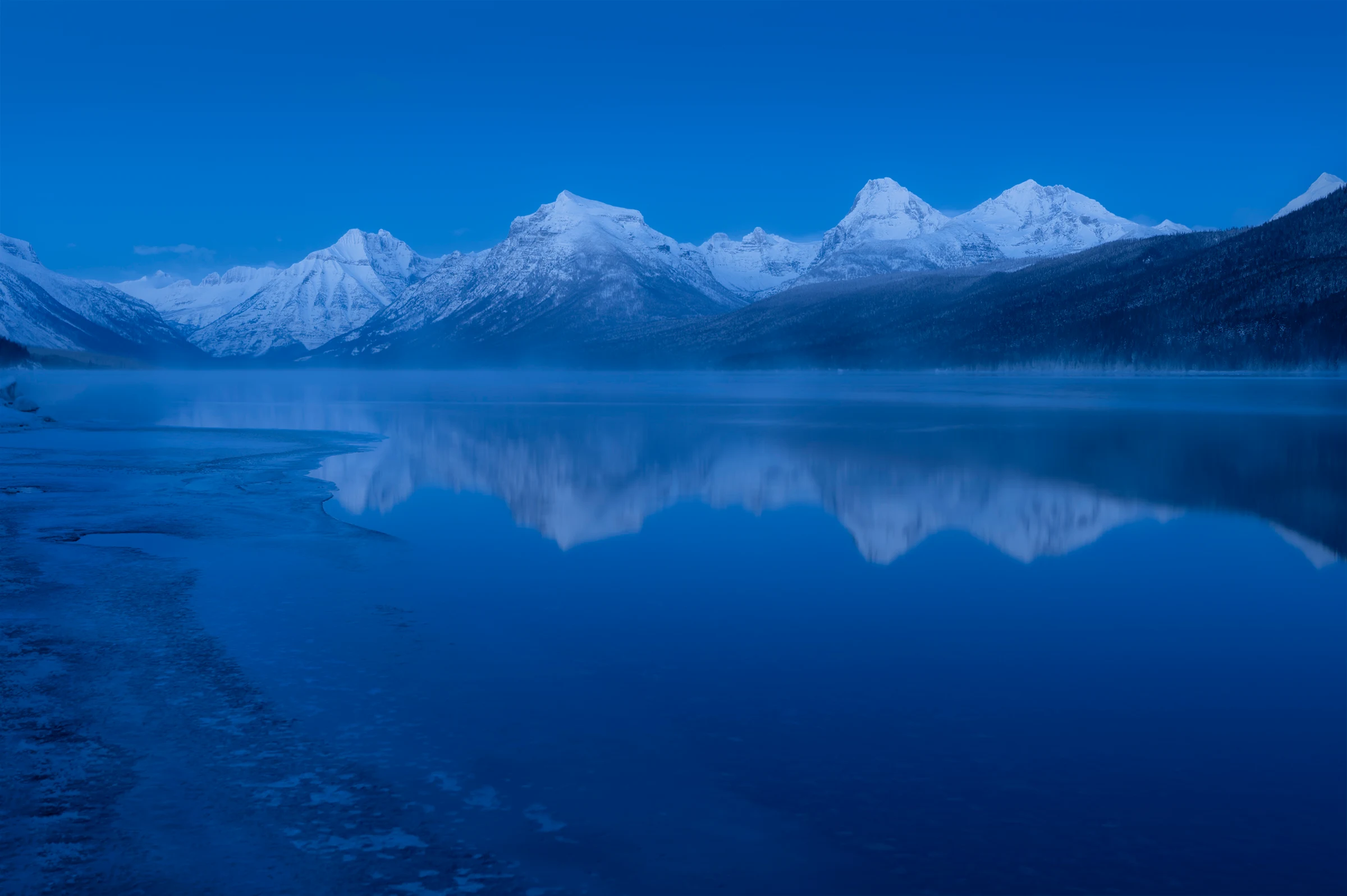
Winter strips the park down to shape, tone, ice, and weather. Most roads and services are closed, daylight is short, and even lower locations demand real preparation. Lake McDonald and the forests near the west entrance can offer frost, fog, reflected blue light, and mountains transformed by snow.
I photographed Lake McDonald in temperatures below -20 degrees Fahrenheit. The cold affected my hands, batteries, breath, and camera response. I stayed close to a safe exit and treated the experience as a cold-weather problem first and a photography problem second.
Reading Glacier's fast-moving weather
Glacier's weather is not one forecast. The Continental Divide separates different patterns, and conditions on the west side can be entirely different from what is happening around St. Mary or the east-side valleys. The west is generally wetter. The east is often windier and more exposed.
I do not use the forecast to decide whether a day will be good. I use it to understand what conditions may be possible and what risk they carry. Broken cloud after rain may create moving light. A lowering snow line may simplify a ridge. Strong wind can ruin a reflection but bring life to clouds and vegetation.
The National Park Service describes Glacier's weather as highly variable and sometimes extreme. Use its location-specific weather guidance as a starting point, not a promise.
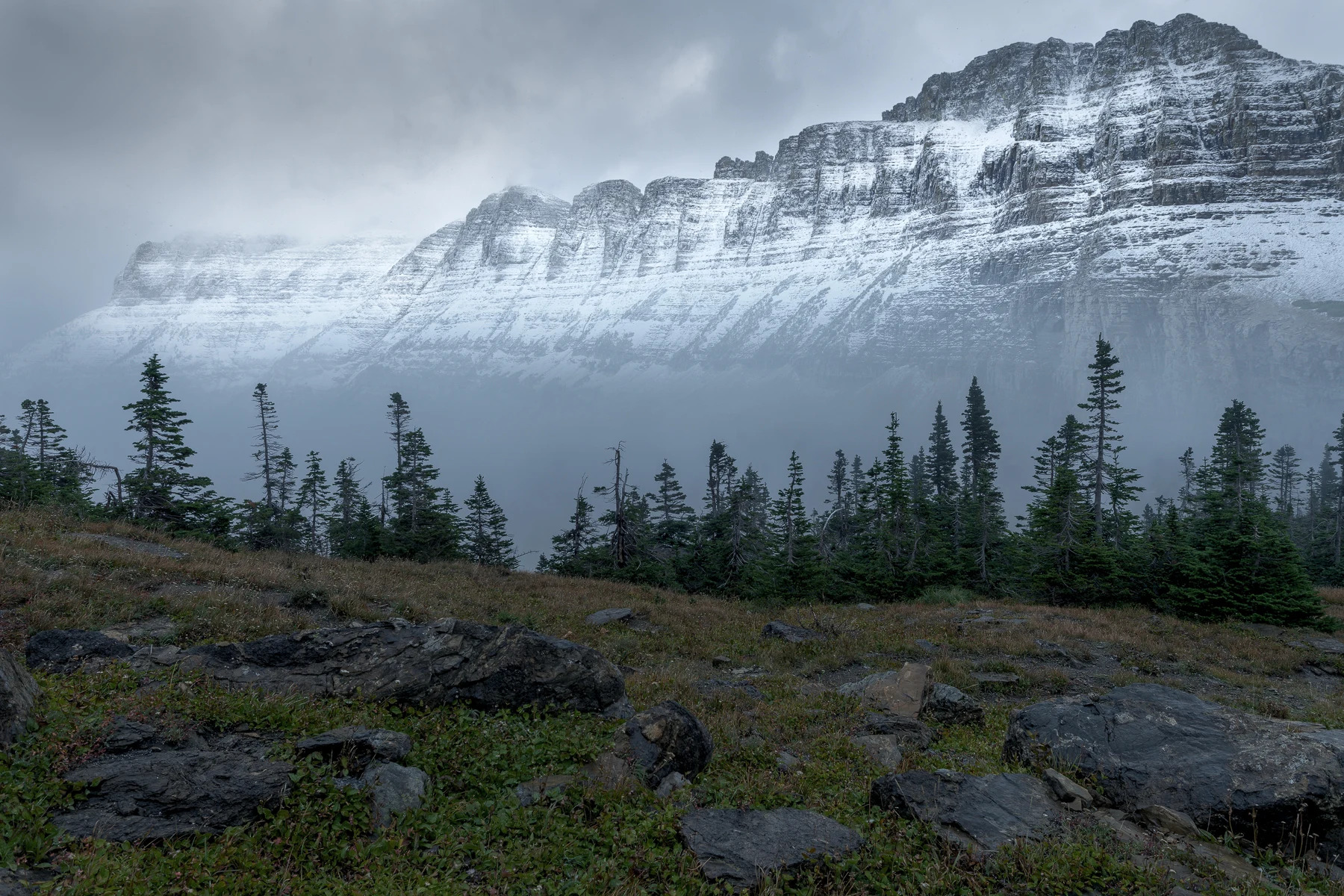
My weather workflow
- 1. Compare locations. Check West Glacier, St. Mary, and Logan Pass separately rather than trusting one regional forecast.
- 2. Watch the trend. Wind direction, cloud height, temperature drop, and precipitation timing matter more than a single weather icon.
- 3. Build lower backups. Keep a lake, forest, or river option for days when alpine terrain becomes unsafe or invisible.
- 4. Set a turnaround point. Decide what change in wind, lightning, visibility, temperature, or trail condition will send you back.
Scouting beyond the obvious overlook
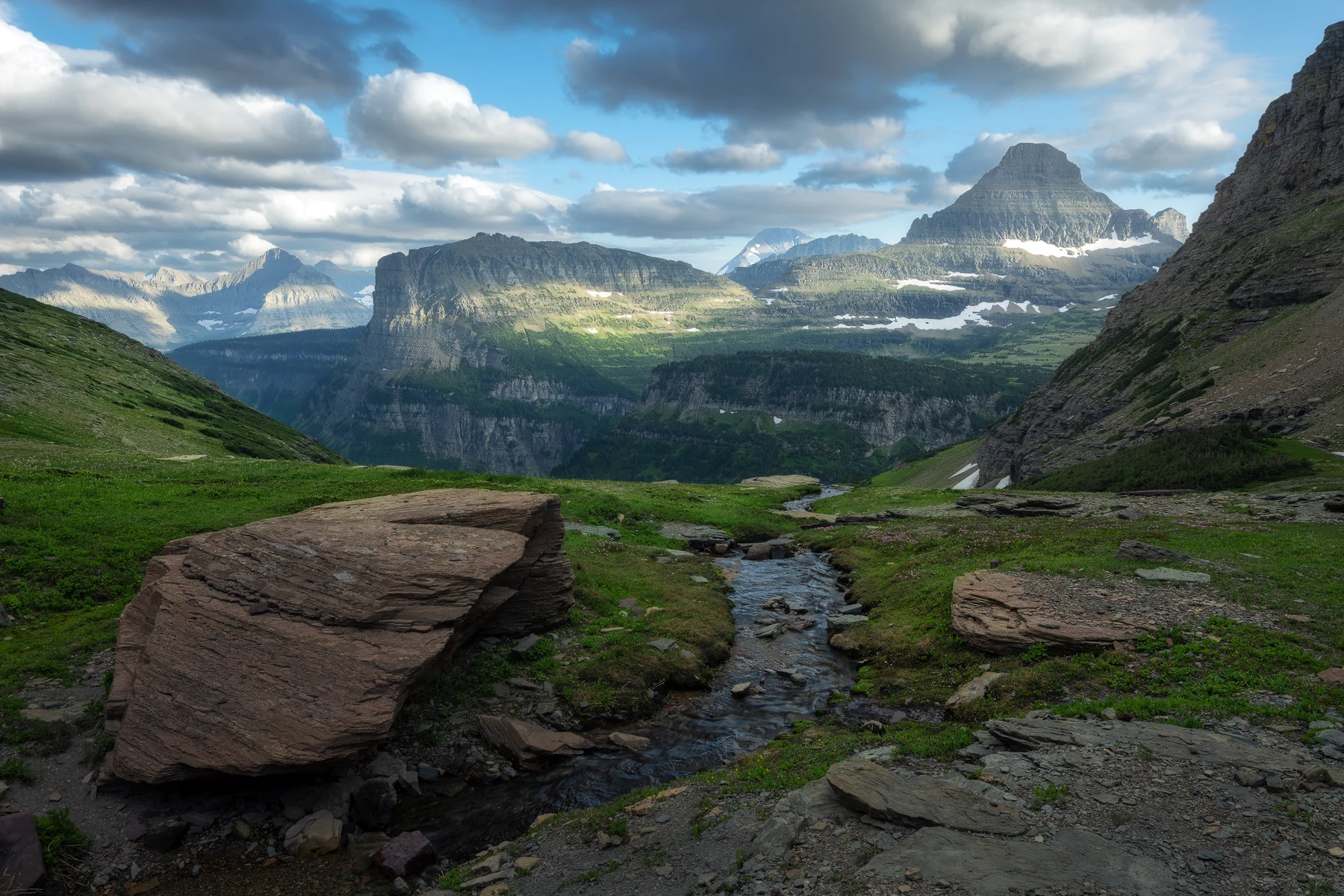
Glacier's famous views are famous for a reason, but a recognizable mountain does not automatically make a personal photograph. My strongest scouting begins after I acknowledge the obvious composition and continue looking.
I study the direction of water, the spacing between trees, the way cloud shadow changes a ridge, and the small foregrounds that connect a viewer to the scale beyond.
I returned to Lunch Creek repeatedly during the year and a half I lived nearby. Repetition taught me where the water could carry the eye, which peaks overlapped, and how quickly light left the valley. The photograph came from that accumulated knowledge, not from discovering a secret spot.
Before the light
Use daylight to test sightlines, identify fragile vegetation, and notice where other visitors need room to pass. Record a few phone frames or coordinates, but also write down why the composition works.
After the photograph
Note what the weather actually did, when direct light reached the subject, and what you would change. Those field notes become far more useful than a generic list of photo locations.
Building stronger mountain compositions
Glacier is visually dense. Peaks overlap, forests fill every gap, bright snow pulls attention, and water can either organize the frame or split it in half. I simplify before I add drama.
Start with structure
Find the largest two or three shapes first: the peak, valley, lake edge, or dark forest mass. If those shapes do not relate cleanly, better light will not rescue the frame.
Give scale a path
A stream, shoreline, band of trees, or sequence of ridges can carry the eye from foreground to mountain. The foreground should clarify the landscape, not simply prove that a wide lens was used.
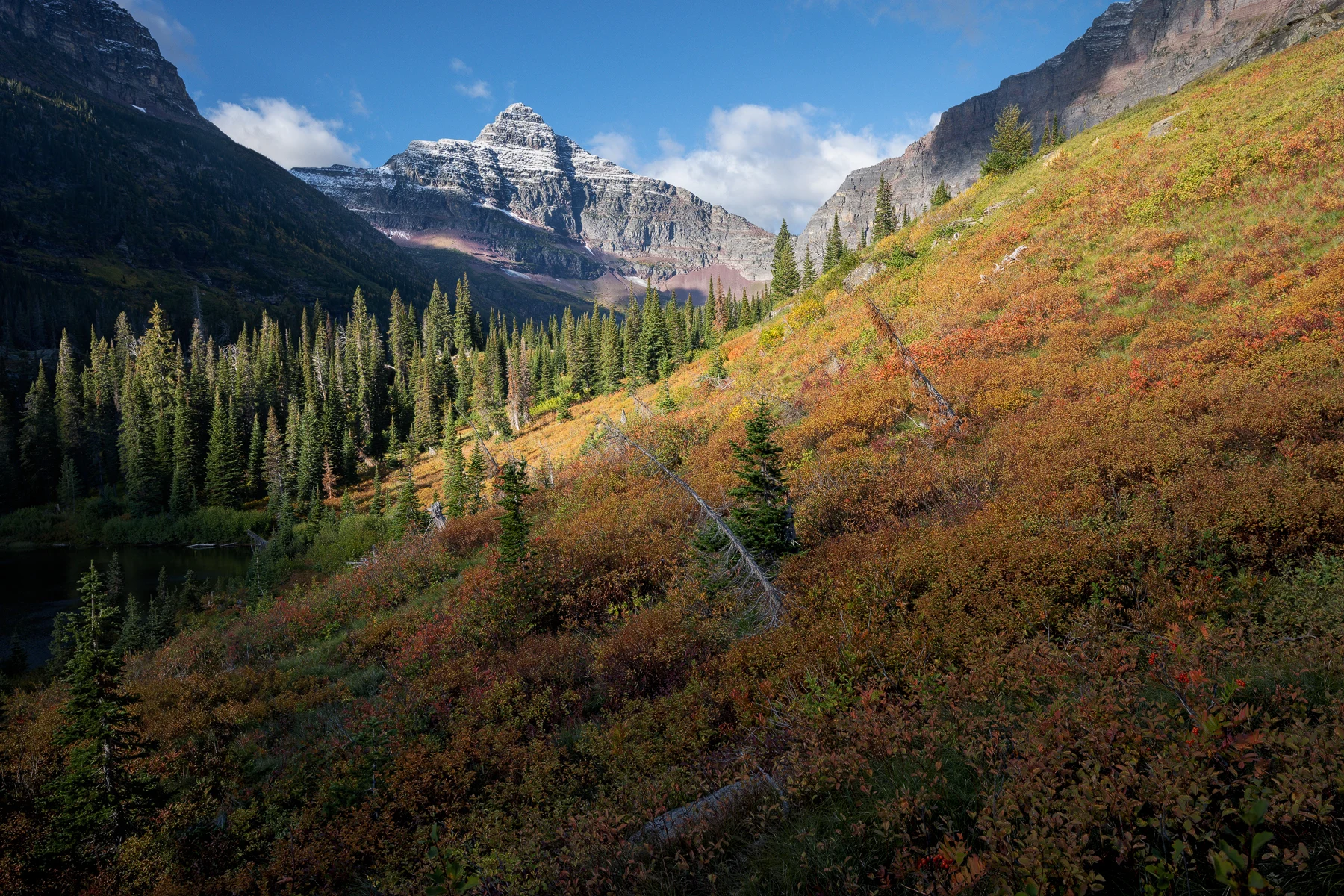
Separate layers
Fog, side light, fresh snow, and shadow can create depth by separating forms that overlap under clear midday light. This is one reason unsettled weather often produces more legible photographs.
Look inward
When the grand view feels chaotic, use a longer lens or work closer. Autumn plants, reflected light, storm-wet rock, ice, and forest patterns can describe Glacier without including the entire skyline.
This balance between grand and intimate work runs through my Mountain Landscapes, Western Forests, Autumn Colors, and Winter Scenes collections.
What guiding taught me about backcountry photography
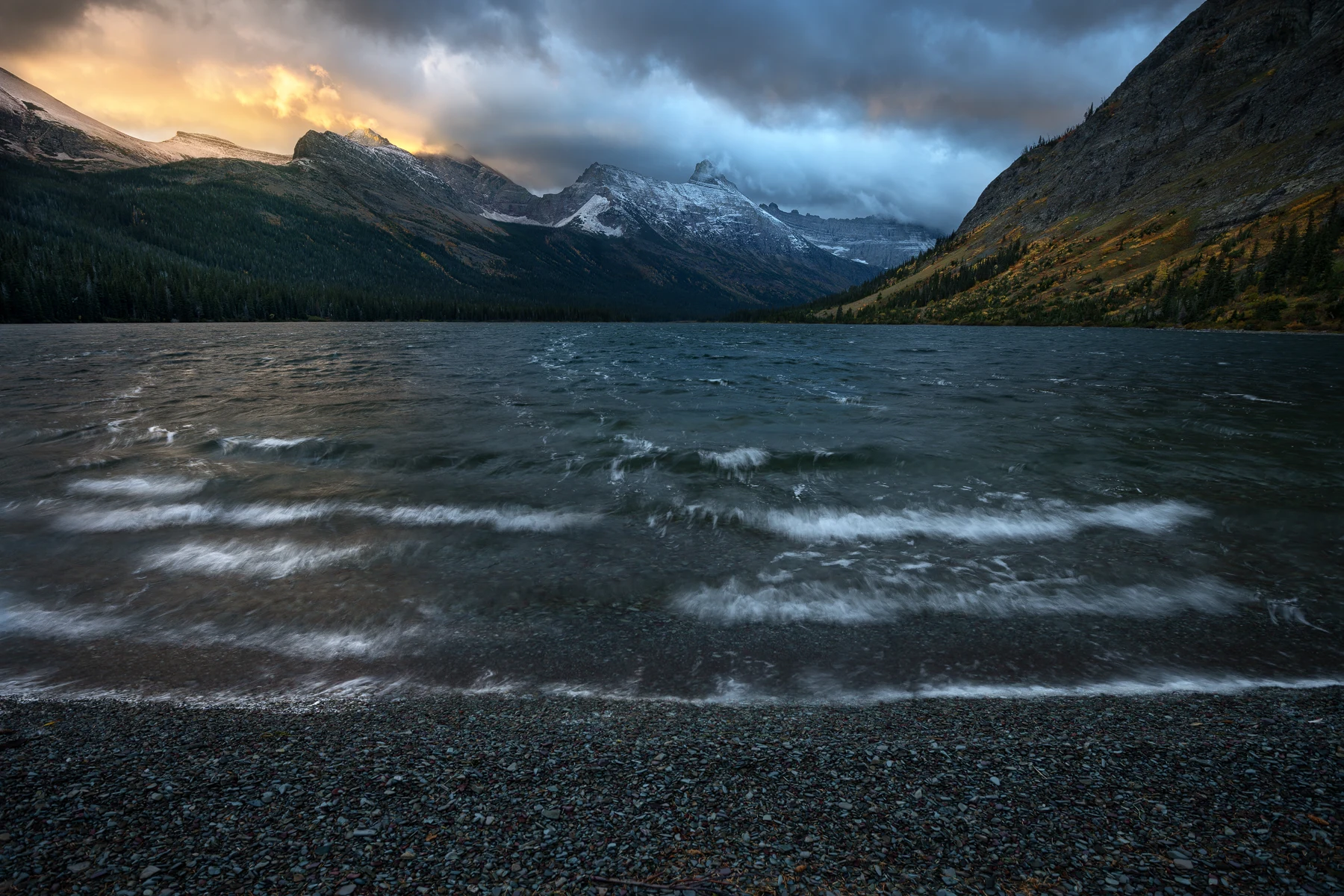
A camera adds weight, delay, and distraction to a backcountry day. Guiding taught me to account for all three. I keep camera access simple, but I do not let equipment interfere with bear awareness, footing, weather decisions, or the needs of the people around me.
In the Belly River region, at Two Medicine, around the Quartz Lakes, and near Elizabeth Lake, I learned how quickly a photography plan becomes a travel plan. Wind arrives across a lake, temperatures fall below freezing, or the distance back to the trailhead becomes the central fact of the day.
The image still matters, but it sits inside a larger system of judgment.
Non-negotiable field habits
- Carry bear spray where it is immediately reachable, understand how to use it, make noise in low-visibility terrain, and follow current park wildlife guidance.
- Treat wilderness camping as a separate commitment. It requires a permit, food storage discipline, route planning, and the ability to remain self-sufficient when conditions shift.
- Protect the turnaround. A sunset is not worth an exposed descent in lightning, losing the trail in whiteout conditions, or extending a group beyond its ability.
- Photograph from durable surfaces. Alpine plants grow slowly, shorelines erode, and a composition is never a reason to damage the place that made it possible.
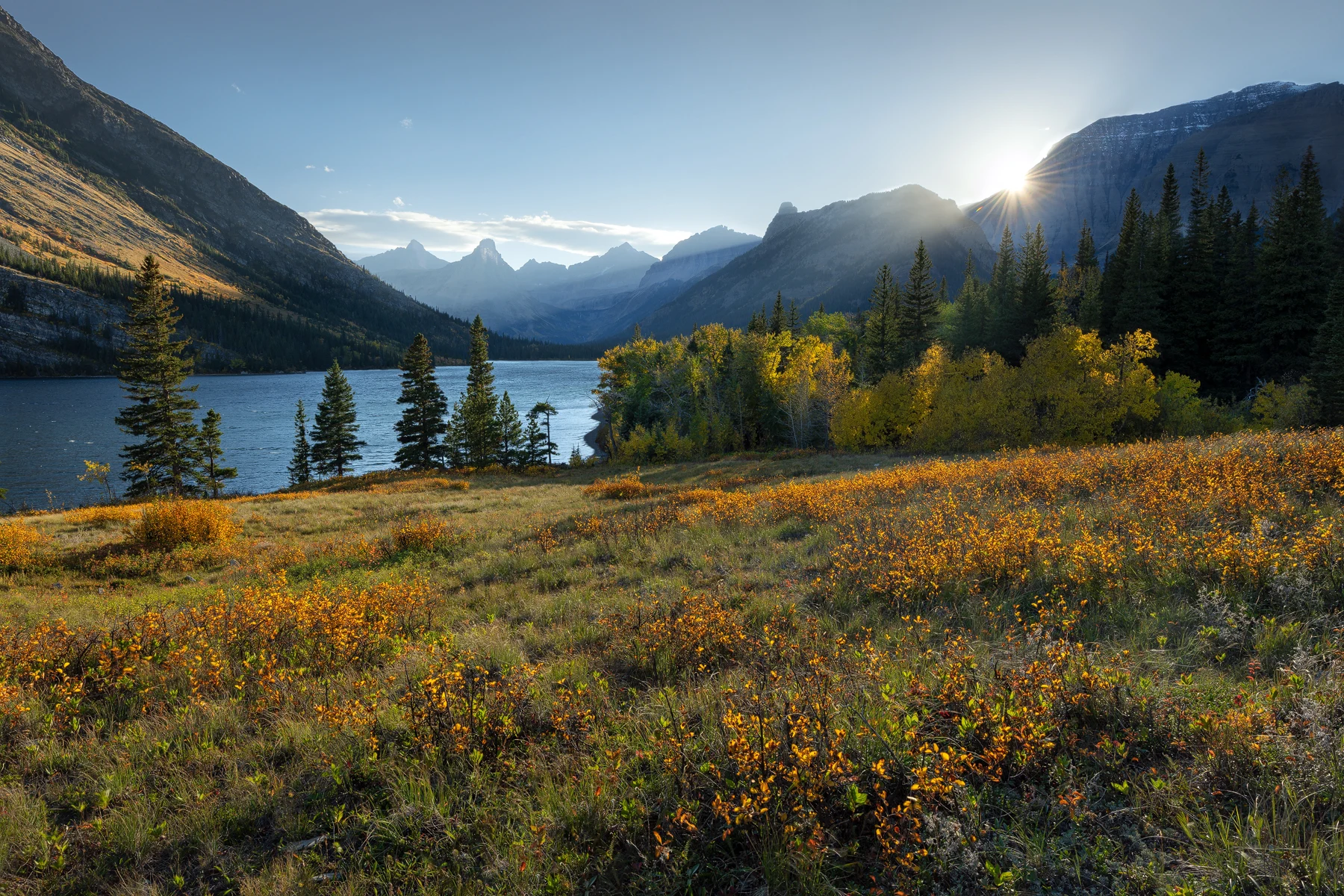
A practical field plan for photographers
A useful Glacier itinerary is flexible enough to absorb weather and focused enough that you are not driving across the park every day. Choose one primary region, one alternate region, and several lower-elevation subjects.
One day
Stay on one side. Scout in daylight, photograph one evening subject, and return to a nearby morning subject instead of spending the best light driving.
Three days
Build one weather day into the plan. Pair an alpine objective with a lake or forest backup and revisit at least one composition.
A week
Work both sides only if conditions justify the drive. Give one region two consecutive dawns or evenings and reserve backcountry days for routes that fit your experience.
What I carry
My exact kit changes with the route, but the decision-making stays consistent: one camera body, a useful wide-to-normal range, a telephoto for compression and intimate work, a stable tripod, lens cloths, extra batteries kept warm, a headlamp, offline maps, rain protection, insulation, food, water treatment, and the safety gear appropriate to the season. I would rather carry a focused kit I can use well than arrive exhausted with every lens I own.
Check access before choosing a photograph
Road openings, parking systems, trail closures, fire restrictions, backcountry permits, and photography rules can change. The park is open year-round, but access is not remotely equal across seasons. Start with current road conditions, seasonal operating information, and permit and reservation guidance, then build your field plan around what is actually open.
Frequently asked questions
What is the best time of year to photograph Glacier National Park?
For broad alpine access, July through early September is the most reliable window, but it is also busiest. Fall offers color and storm potential with reduced access. Winter provides the simplest, quietest landscapes but demands self-sufficiency. Spring is strongest for water, saturated forests, and changing weather. Choose the season for the photographs you want, not because one month is universally best.
How many days should a photographer spend in Glacier?
Three full days is a useful minimum for scouting, one weather disruption, and a return visit. Five to seven days gives you a much better chance to understand one or two regions instead of collecting rushed overlooks.
Do I need a permit for still photography?
As of this article's publication, the National Park Service says most still photography involving eight or fewer people does not require a permit when it occurs in areas open to the public, uses hand-carried equipment, does not require exclusive use, and does not negatively affect resources or visitors. Organized workshops and other activities can have separate requirements. Verify the current Glacier photography permit guidance before your trip.
Can I rely on the Going-to-the-Sun Road being open?
No. Lower portions may be accessible while the alpine section remains closed, and the full road generally does not open until late June at the earliest. Weather can also close it early in fall. Check current status immediately before the day you plan to use it.
How should I photograph Glacier without repeating the same iconic views?
Return to one landscape in different weather, use water and forest as subjects rather than decorations, work with longer focal lengths, and spend time below the obvious viewpoint. Familiar mountains become personal when the composition reflects what you noticed and waited for.
The photograph is only one part of the day.
Glacier taught me to value the decisions surrounding an image: when I returned, what I noticed, how I responded to weather, and whether I moved through the landscape responsibly. Those habits have stayed with me everywhere I photograph.