Down into Canyon Country
A three-day backpacking trip into remote canyon country, shaped by ice, river crossings, silence, and reflected canyon light.
February 1, 2022 · 5 min read
Before the sun rose, I left Torrey and headed east for a few hours, mostly on dirt, treacherous roads. I arrived at my trailhead, which was not much of a trail at all, and started down a dusty, rocky game path. I began high above the canyon floor, looking down nearly 1,500 feet. I could see the reflection of ice, hear the faint sound of flowing water, and wonder what I was about to experience down below.
Silence filled the air as I descended deep into canyon country, without a soul in sight. The precipice hike was mostly mellow, with only a handful of steep, loose sections. Time passed quickly, and before I knew it, I was at the bottom of the canyon. To my surprise, each bend of the river was packed with thick ice. Every exposed rock was capped in it. The river looked like chocolate milk, with blue-white chunks of ice racing downstream at an alarming rate.
I searched the riverbank and found two large sticks to help with the crossing. I sat at the shore to study my route and started thinking: this water is going to be painfully cold, and I really do not want to cross it again until the trip is over.
I put one stick in the river and held it against my leg to test the depth: knee deep. Hoping it would not get deeper than that, I threw on my 35-pound pack and unbuckled the hip and shoulder straps for safety. The first step in was instant pain. Softball-sized ice chunks bounced off my legs and rushed down the river. One step after the next, the sticks did their job. Halfway through, the pain ramped up. My thighs and toes throbbed with every step.
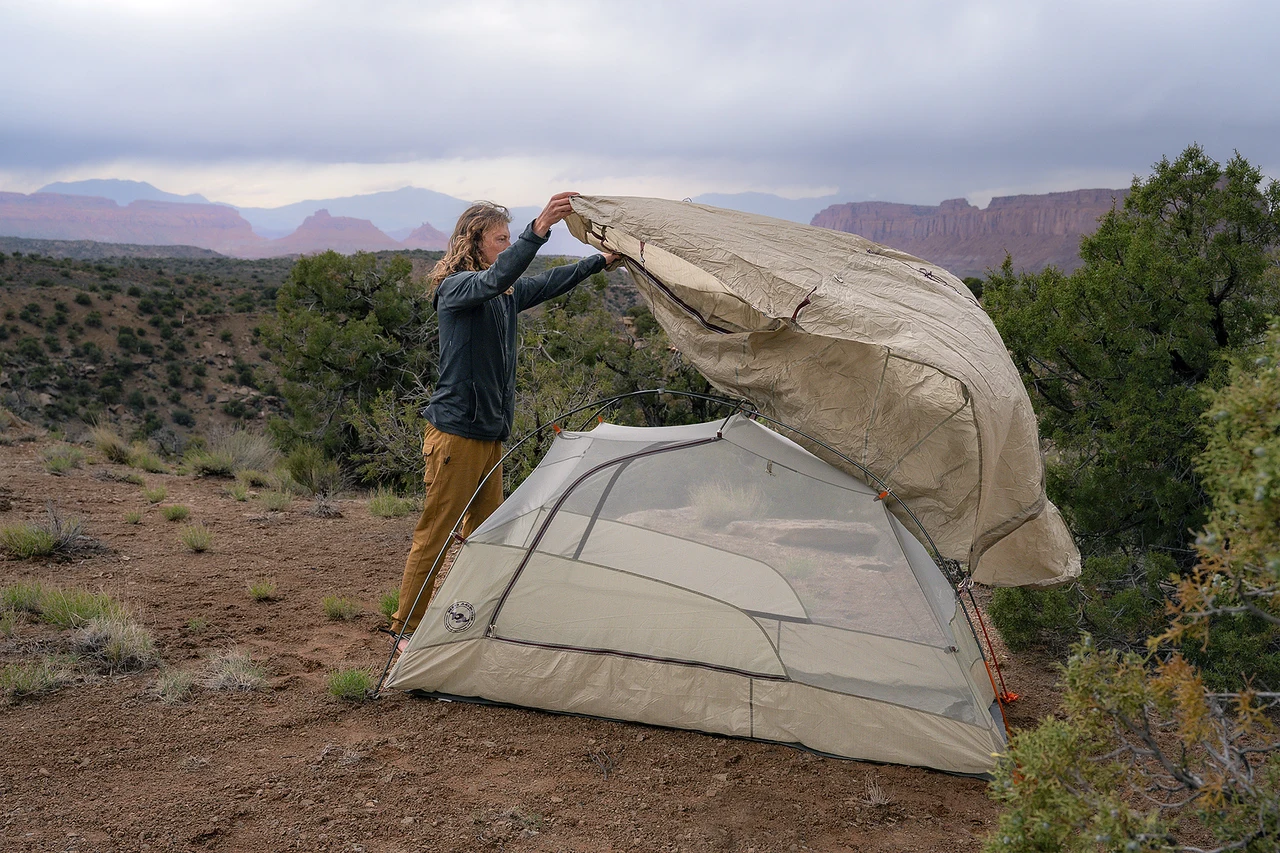
I took a big step onto a small island in the middle of the river. The pain somehow felt worse there than it had in the water. I quickly scurried across the rest of the river, threw down the sticks, and rubbed my legs frantically to get the blood moving again. There was nothing to do but start walking. I walked barefoot until I reached the entrance of a wide tributary canyon and set my pack down. This would be camp. After getting everything organized, the tent pitched, and the bed set, I loaded my camera gear into a lightweight pack. The moment I had been waiting months for had arrived.
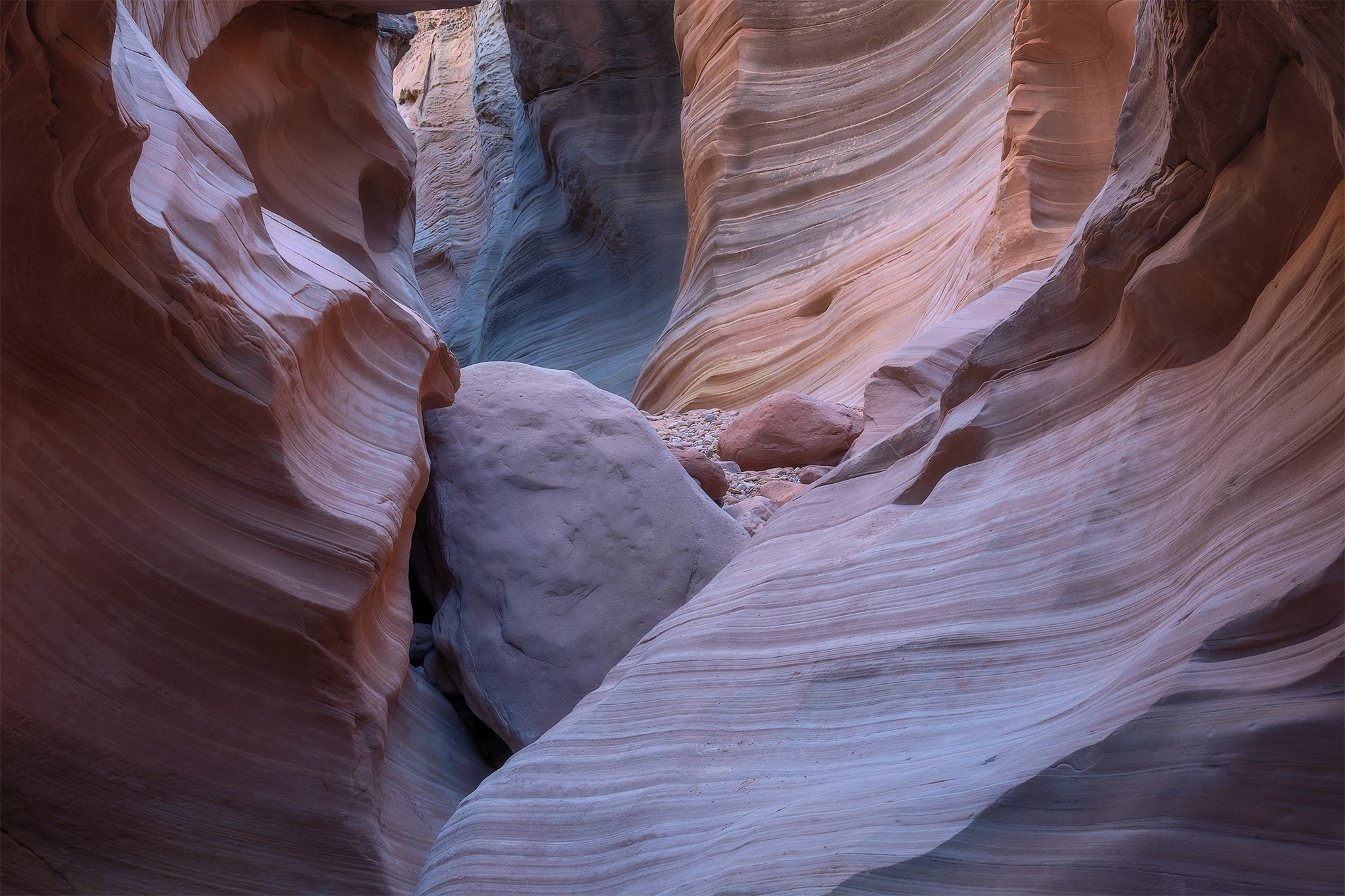
Just ten minutes into the canyon, it began to narrow. The walls closed in and started to wave in intricate patterns. I came to what felt like an entrance, where both sides of the canyon almost met in the middle, as if saying, enter here. I walked through with amazement, looking up and then back down at my feet. Each bend revealed new chambers, smooth and rough textures, and boulders scattered across the floor.
Some bends were receiving faint golden glows, exactly what I was after. The canyon would tighten and then quickly widen. I moved through dark tunnels that slowly turned to light. Eventually I reached what looked like the end of the canyon, where the walls lowered by about 20 feet. The textures were smooth, the light was soft and gold, with hints of blue and magenta. It looked too good not to photograph. Before I knew it, the light was fading and it was time to return to camp.
Faint sunlight woke me. I unzipped the tent door to a concerning sight: heavy, dark clouds a few miles upriver. I was not going to take any chances. I quickly shoved everything into my pack and took off. I crossed the freezing river at the coldest time of day, hiked up a nearby hill, and found a better place to set up my tent. The view was much prettier than my first camp, but now I had the ice-filled river to cross at least twice a day.
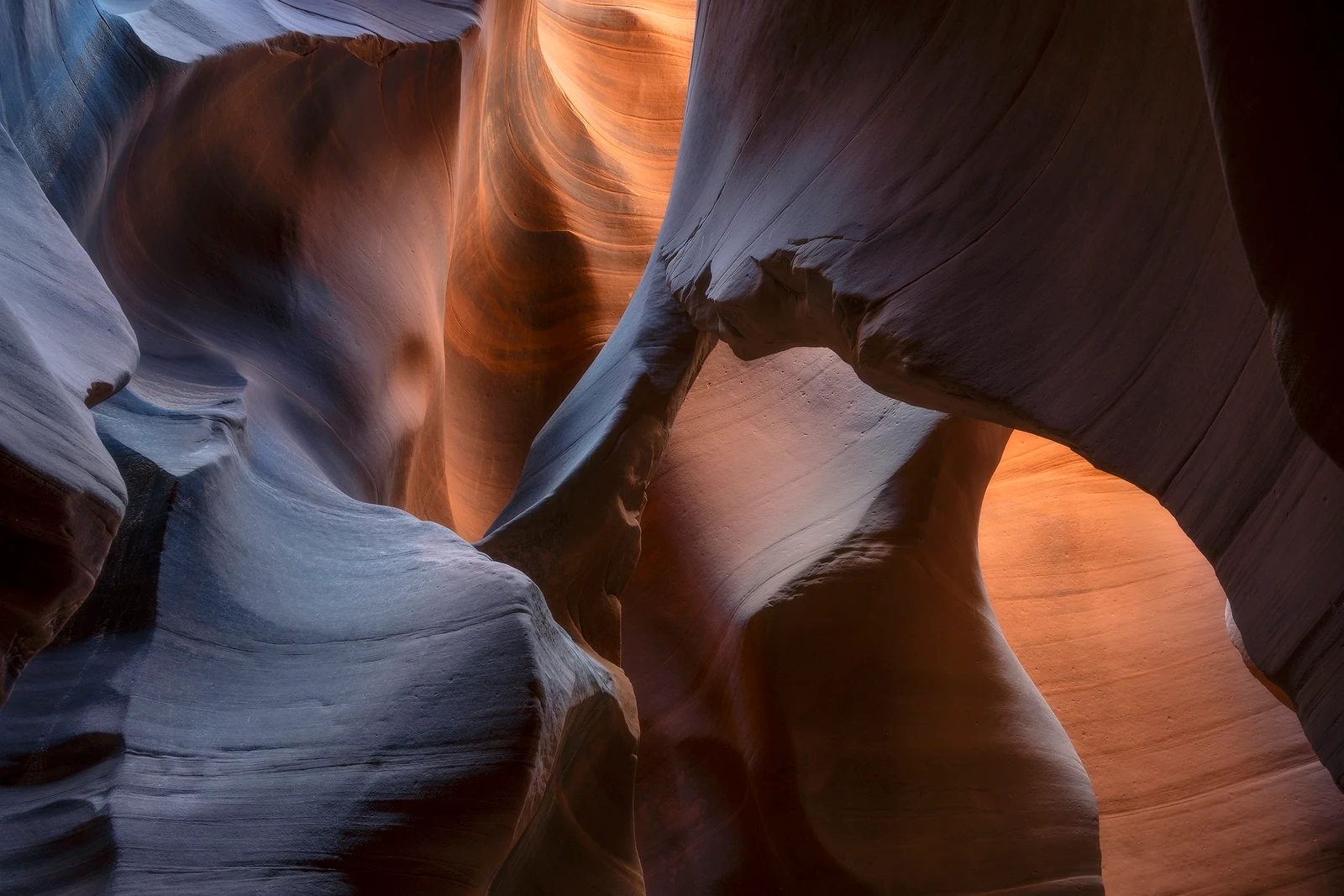
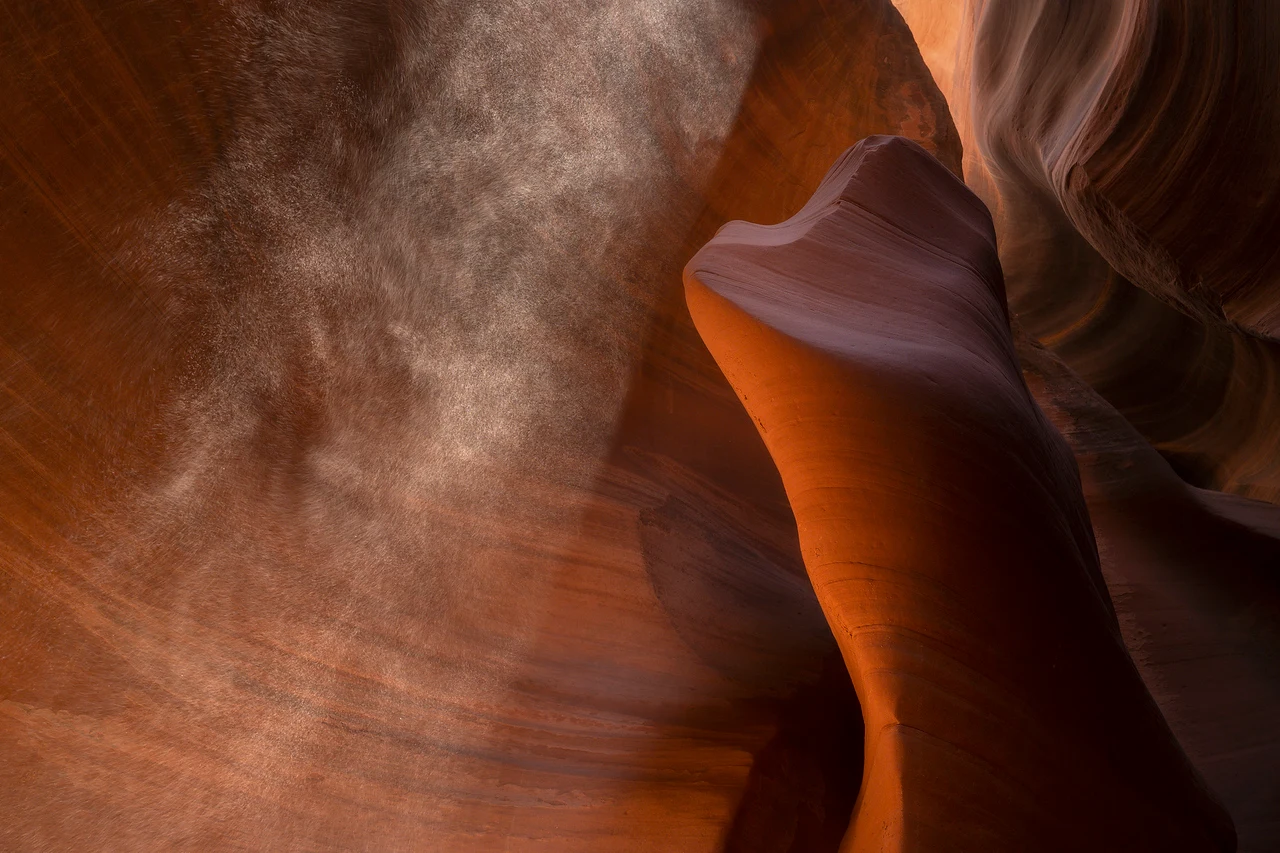
Back in the canyon, I started noticing amazing light all around. Light morphed around bends, creating shapes and mind-bending beauty. Blue, cyan, and magenta colors filled the shadows of the cool canyon. I spent all day exploring each bend with optimism, awe, and with my camera and tripod in hand.
After eight or so hours in the canyon, traveling up, back down, up again and again, I became disoriented. Which way was up canyon or down canyon? I had to sit and get my bearings. In my defense, I had barely eaten or had much water because the canyon kept distracting me. Eventually I exited, crossed the river, and returned to camp.
I hiked high above the river to see the setting sun. The cliffs towered like natural skyscrapers while the frozen river below reflected the blue sky. Sunset came, and so did the wind. It was time for bed.
I rose early to enter the canyon again and spent most of the day photographing. Afterward, I packed up all my gear. Today's destination was my truck, and I arrived just in time for sunset.
I stood along a cliff with a 360-degree view of the natural world. Still not a human in sight, not a sound to be heard, just the sun along the cliff band fading into the horizon.
The following day, I drove across a rough ridge and down into washes leading to the river. I took a swim in the freezing, chocolate-colored water while the outside temperature rose to 80 degrees. It was my last full day in the area, and I wanted to hike around new terrain.
As I drove in a new direction, something outside the window caught my eye: fingered, stand-alone cliffs towering into the sky. I moved through washes, up steep lava flows, and onto a mesa. There it was, looming in the distance.
My alarm rang out early in the dark. My headlamp pierced the air, lighting only a few feet ahead. I navigated the washes, climbed the lava flow, and reached the mesa. Ten minutes later, I was right under the cliff band. I set up my camera and waited for sunrise, hoping the feature would receive amazing light. I waited patiently, then realized no light was going to reach the subject I wanted. There was nothing to do but enjoy the stillness of the landscape. Time to head home.