Autumn in Capitol Reef National Park
Fall color, softer light, and field-tested advice for photographing Capitol Reef when the desert turns gold.
August 1, 2026 · 5 min read
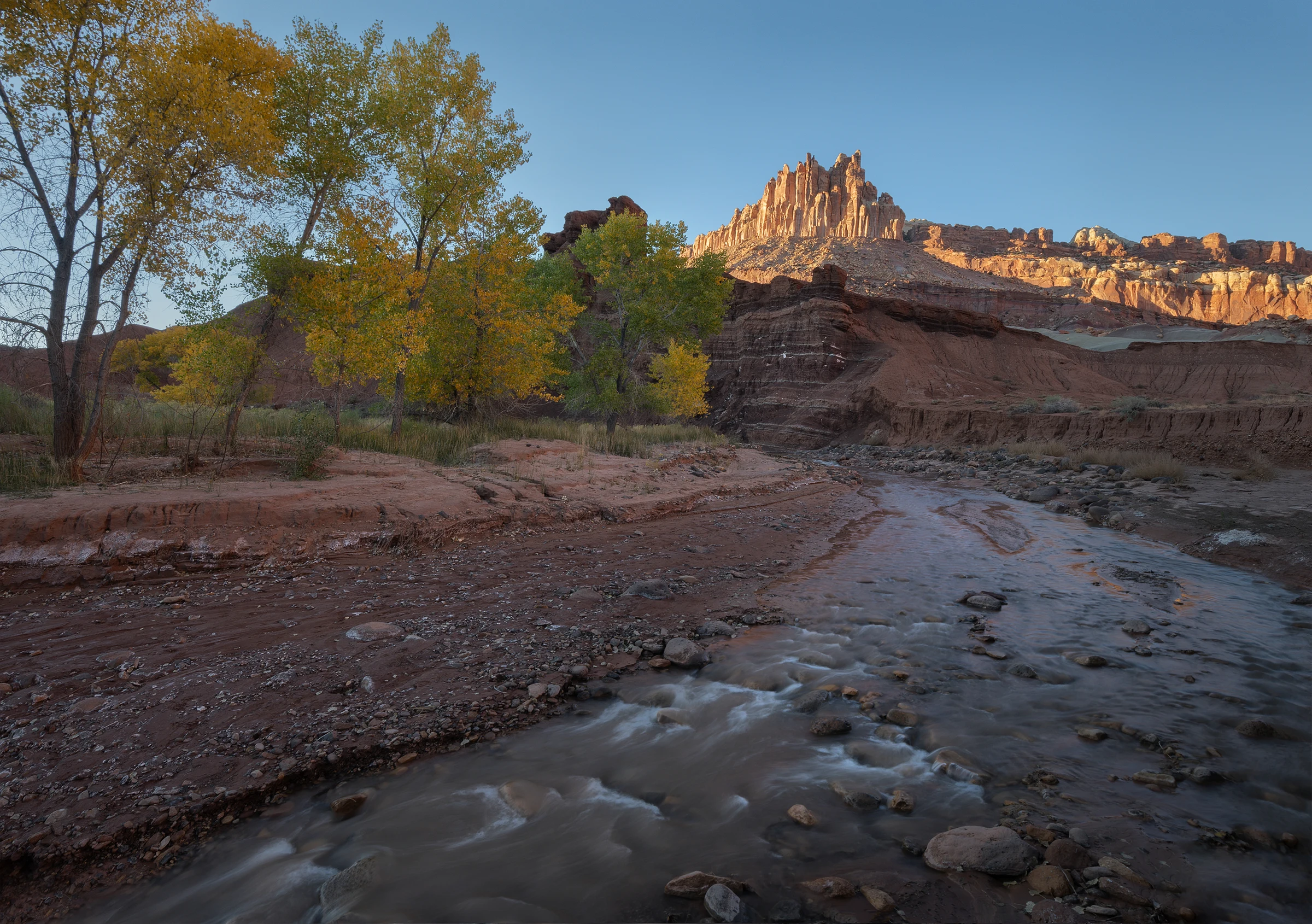
Autumn changes the rhythm of Capitol Reef. The high summer heat begins to fade, the angle of the sun drops, and cottonwoods and desert willows along the Fremont River start to glow against the red cliffs. For photographers, that combination creates one of the most rewarding windows of the year: comfortable conditions, quieter locations, richer color, and light that holds its quality longer into the day.
The strongest fall color usually arrives from mid-October through mid-November, with the last week of October and the first week of November often producing the best balance of yellow cottonwoods, blooming rabbitbrush, and warm sandstone contrast. Mornings can be crisp, afternoons are often pleasant, and the lower sun helps reveal texture in cliffs, rippled sandstone, foliage, and canyon walls.
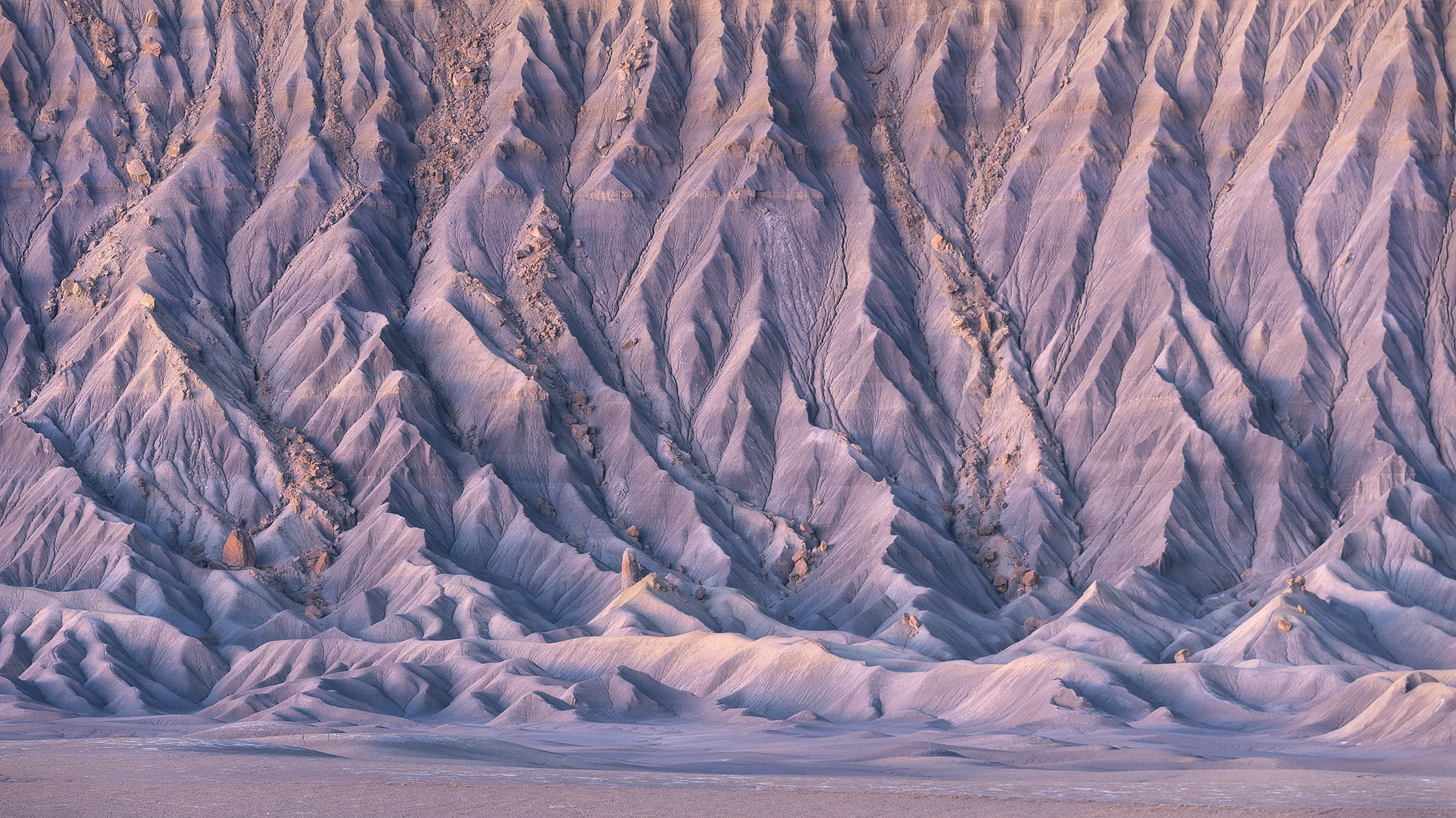
Good fall color in a desert landscape is not hard to find, but the best compositions often depend on local knowledge. The Fremont River corridor around Fruita is a reliable place to begin, with cottonwoods turning bright gold below red-brown cliffs. Side canyons and gorge trails, including places like Sulphur Creek and Capitol Gorge, can hold willows, shrubs, reflected light, and shaded walls that extend the day. Badland areas and uplands near the Waterpocket Fold add rabbitbrush, ochre earth, and unusual color relationships that feel distinctly Capitol Reef.
In the field, timing matters. Arrive just after sunrise or about an hour before sunset, when the lower autumn sun gives the land longer shadows and softer contrast. Use layered compositions: foreground leaves or plants, mid-ground color, and background cliffs. Let the structure of the desert carry the frame, then weave the seasonal color through it. A wide-angle lens is helpful for canyon views, a mid-range lens works well for trees and cliffs, and a telephoto can isolate color, texture, and small relationships across the landscape.
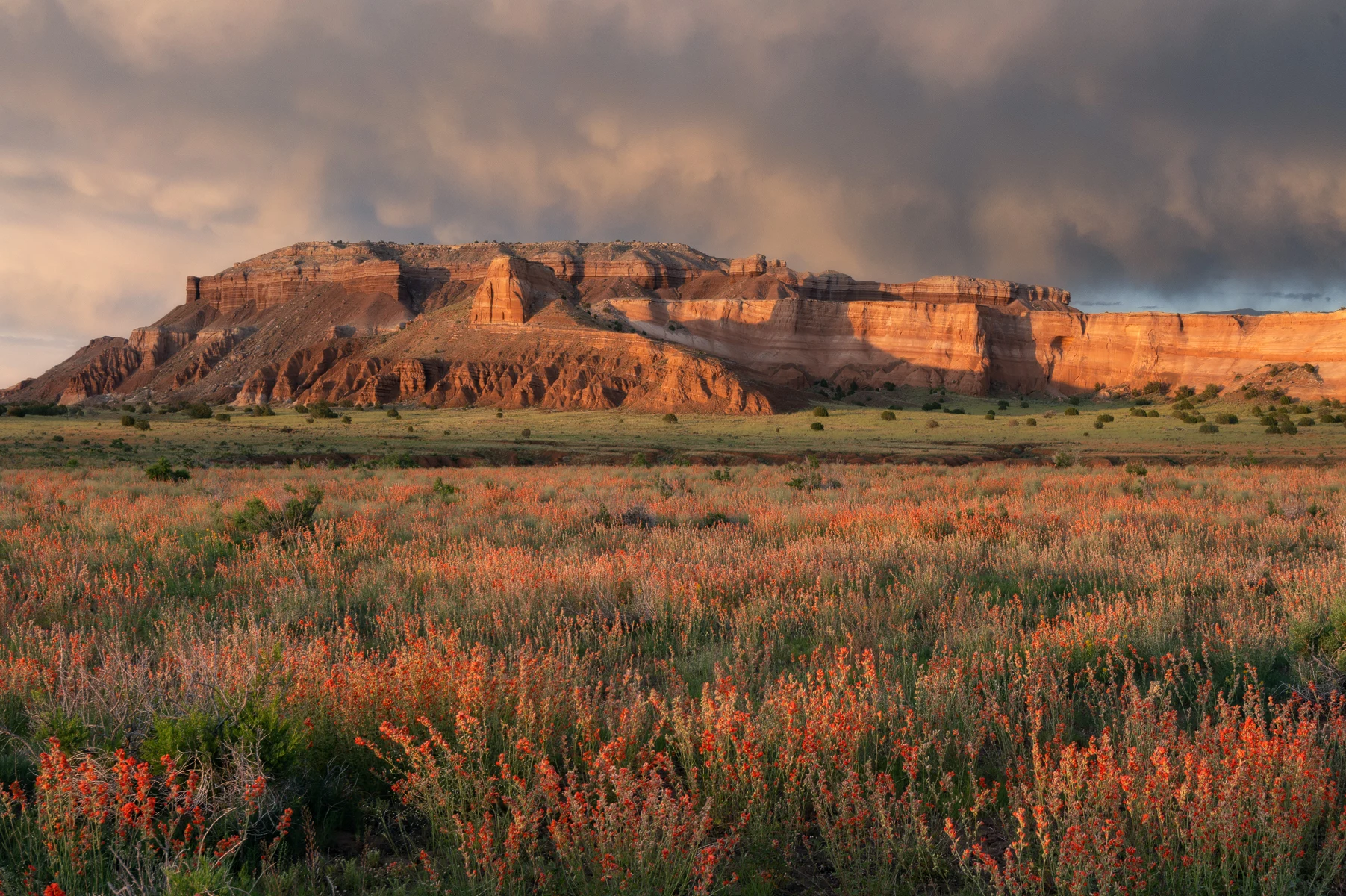
Weather can be an advantage in fall. A passing storm, brief overcast, or clearing sky can give Capitol Reef dramatic light and separation that would not exist on a cloudless day. Conditions also change quickly, especially on dirt roads after rain, so it helps to stay flexible, watch the forecast, and keep backup locations in mind.
One of the great rewards of photographing Capitol Reef in autumn is access to quieter places. Remote overlooks, side roads into the badlands, and small tributaries away from the busiest areas can offer stronger compositions without the pressure of crowds. These places are not always obvious, and that is part of their value: they invite slower seeing and more intentional photographs.
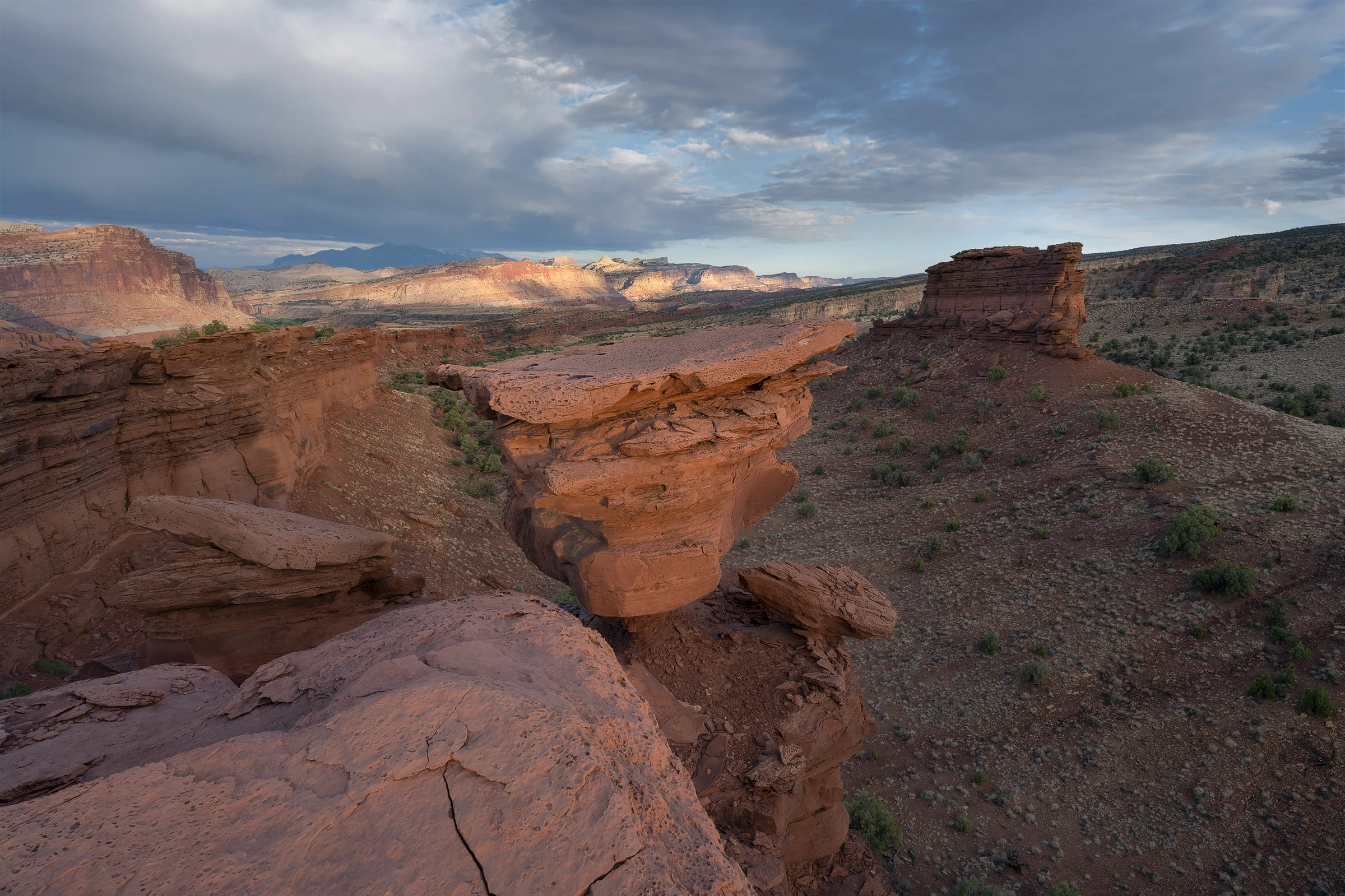
Pack layers, a wind shell, and a tripod. Morning and evening temperatures can feel cold, while midday may warm significantly. Expect the desert to be subtle rather than uniformly orange. When the right combination of light, color, cliff, canyon, and calm air comes together, autumn in Capitol Reef becomes unforgettable.
Guided tours and fall workshops are built around that exact timing. In the field we work through camera settings, composition, light, and location choices in real time, with the goal of leaving with stronger images and a deeper understanding of why this landscape works so beautifully in autumn.